


Houston’s Offshore Drilling Resurgence and Equipment

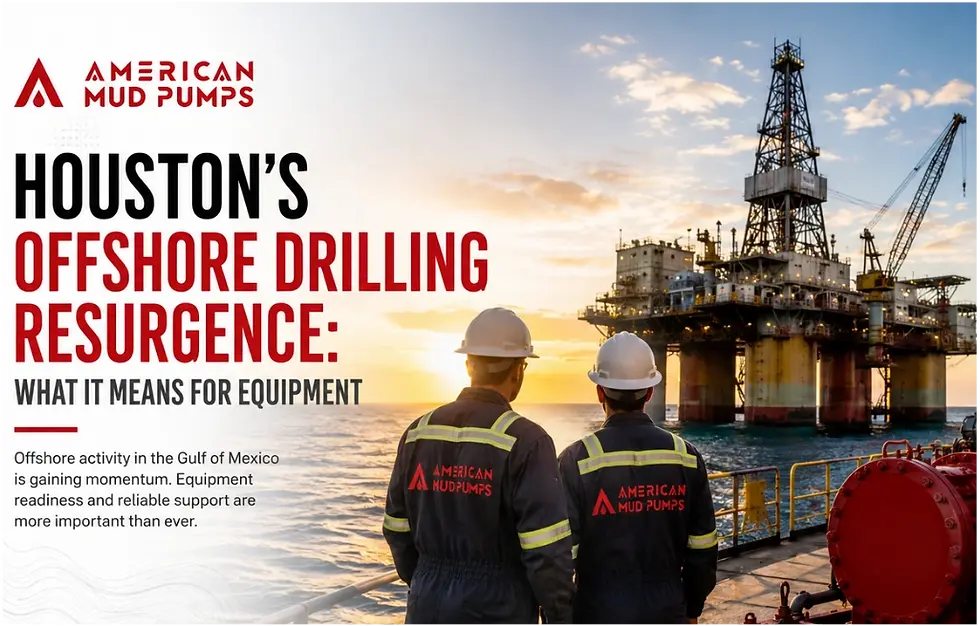
Houston has long been closely connected to offshore oil and gas, and activity in the Gulf of Mexico is once again attracting attention.
Recent reporting from the Houston Chronicle highlighted renewed momentum in Gulf offshore development, driven by advances in drilling technology, new projects, and changes affecting offshore investment. The region also reached more than 2 million barrels of oil production per day at the end of 2025, its highest level in six years.
For drilling contractors, equipment suppliers, and maintenance teams, the question is not simply whether offshore activity is increasing.
It is what this renewed activity means for equipment readiness, reliability, parts availability, and technical support.
As offshore operations become more demanding, dependable drilling equipment and responsive technical support become increasingly important.
Why Is Offshore Drilling Gaining Momentum?
The Gulf of Mexico remains one of the most important offshore oil-producing regions in the United States.
Recent developments point toward renewed interest in deepwater and high-pressure projects. The Houston Chronicle reported that offshore drilling has added rigs while U.S. onshore rig activity has declined, indicating a different trajectory for offshore operations.
Technology is also changing what operators can achieve offshore.
Improved drilling technologies, better subsurface imaging, subsea systems, and increasingly sophisticated development strategies are helping operators pursue resources in challenging environments.
At the same time, the economics of offshore projects can differ significantly from short-cycle onshore operations. Offshore developments typically require substantial upfront investment, making equipment performance and operational planning particularly important.
What Does Increased Offshore Activity Mean for Equipment?
More drilling activity does not simply create demand for new rigs.
It creates demand across the entire equipment lifecycle.
As contractors and operators prepare equipment for demanding operations, they need to consider:
Equipment condition
Preventive maintenance
Replacement parts
Expendable components
Repair requirements
Equipment configuration
Field service
Technical support
This is particularly relevant for mud pump systems.
Mud pumps are fundamental to drilling fluid circulation, and their performance directly affects the ability of a drilling system to maintain required operating conditions.
For offshore operations, equipment readiness is not something that should be addressed only when a failure occurs.
Why Mud Pump Reliability Matters Offshore
A drilling operation depends on consistent fluid circulation.
Mud pumps move drilling fluid through the system, supporting functions such as cuttings transport, wellbore control, cooling, and lubrication.
That makes mud pump condition an important part of overall drilling equipment readiness.
Components such as:
Valves and seats
Liners
Pistons
Fluid end components
Power end components
Seals and packing
can all influence pump performance and maintenance requirements.
The appropriate components depend on the pump configuration, operating conditions, drilling fluid, pressure requirements, and application.
For that reason, sourcing mud pump parts should involve more than simply matching a part by appearance or general description.
Offshore Operations Increase the Importance of Maintenance Planning
Offshore maintenance presents a different set of logistical considerations than many land-based operations.
Access to equipment, personnel, replacement components, and service resources can be more complex. Maintenance activities therefore need to be planned with the operating environment in mind.
A preventive maintenance strategy can help teams identify wear, schedule component replacement, and prepare parts before equipment problems become operational disruptions.
For mud pumps, maintenance planning can include inspection of fluid end components, power end components, lubrication systems, bearings, crossheads, liners, valves, and other wear components.
The exact maintenance requirements should always be determined based on the specific equipment and operating conditions.
Equipment Readiness Starts Before the Rig Goes to Work
One of the most effective ways to support equipment reliability is to address potential issues before operations begin.
For drilling contractors and maintenance teams, this can mean reviewing:
Pump condition
Inspect major components and identify existing wear or maintenance requirements.
Replacement parts
Determine which expendable and replacement components may be required based on equipment condition and planned operations.
Operating requirements
Review expected pressure, flow, speed, drilling fluid characteristics, and duty cycle.
Service requirements
Determine whether inspections, repairs, overhauls, or field-service support may be needed.
Technical documentation
Maintain equipment records, service history, specifications, and relevant documentation.
This approach can help turn equipment maintenance from a reactive activity into a more structured part of operational planning.
Why the Right Drilling Equipment Supplier Matters
As offshore activity develops, the role of a drilling equipment supplier goes beyond providing equipment.
Operators and contractors may need support at several stages:
Equipment → Parts → Maintenance → Repair → Field Service
A supplier that can support multiple stages of this lifecycle can provide greater continuity between procurement, maintenance, engineering, and operations teams.
This is especially valuable when the equipment is highly specialized or when replacement components must be selected according to specific pump configurations and operating conditions.
The right supplier should be able to understand not only what component is needed, but also why it is needed and how it fits into the operating system.
American Mud Pumps Supports the Complete Equipment Lifecycle
The renewed interest in offshore drilling reinforces an important point: equipment performance depends on more than the initial purchase.
American Mud Pumps supports drilling operations with mud pumps, replacement parts and expendables, field service, repairs, overhauls, preventive maintenance, and technical expertise.
For mud pump operations, that includes support for critical components such as liners, pistons, valves, seats, fluid ends, and power end components.
This integrated approach allows customers to address equipment needs across different stages of the lifecycle—from sourcing and application requirements to maintenance, repair, and ongoing technical support.
For contractors and operators preparing equipment for demanding drilling applications, having access to both equipment and technical support can be an important part of operational planning.
What Should Drilling Contractors Consider as Offshore Activity Grows?
As Gulf offshore activity evolves, drilling contractors and equipment teams can use several questions to evaluate their readiness:
Is our equipment ready for the planned duty cycle?
Equipment should be evaluated according to its intended application and operating conditions.
Do we have the required replacement parts?
Critical expendables and replacement components should be identified before they become an urgent requirement.
Is our maintenance plan current?
Maintenance schedules should reflect actual equipment condition, operating requirements, and manufacturer recommendations.
Do we have access to technical support?
When troubleshooting or repair requirements arise, having a knowledgeable equipment and service provider can help maintenance teams determine the appropriate next step.
Can our supplier support us beyond the initial equipment purchase?
A long-term equipment relationship can provide value through parts, field service, repairs, maintenance, and technical guidance.
The Bigger Picture for Houston’s Oilfield Equipment Market
Houston's position in the energy industry means that changes in Gulf offshore activity have implications beyond offshore platforms themselves.
An increase in offshore development can affect the broader network of:
Drilling contractors
Oilfield equipment suppliers
Equipment manufacturers
Parts suppliers
Field service providers
Maintenance organizations
Engineering companies
For Houston-based and Gulf-focused operations, this makes equipment readiness and supply-chain planning increasingly relevant.
The offshore market may continue to evolve alongside technology, project economics, regulatory developments, and global energy demand. But regardless of those variables, drilling operations still depend on equipment that can perform reliably under demanding conditions.
Houston's offshore oil and gas sector is showing renewed momentum, with the Gulf of Mexico continuing to play an important role in U.S. energy production. Recent activity suggests that technology and new development strategies are helping shape the next phase of offshore operations.
For drilling contractors, that creates a practical priority: equipment readiness.
Reliable mud pumps, properly selected replacement parts, preventive maintenance, repair capabilities, and field service all contribute to keeping drilling systems prepared for demanding applications.
At American Mud Pumps, we support customers with equipment, parts, service, repairs, and technical expertise across the mud pump lifecycle.
As offshore drilling evolves, reliable equipment support remains essential.
Need mud pump equipment, parts, or service support? Visit American Mud Pumps to explore our solutions or request a quote.
FAQ
Recent industry reporting indicates renewed interest and activity in Gulf offshore development. The region's oil production also reached more than 2 million barrels per day at the end of 2025, its highest level in six years. However, activity varies by project, operator, and market conditions.
Why are mud pumps important in offshore drilling?
Mud pumps circulate drilling fluid through the drilling system. Their performance supports functions including cuttings transport, wellbore control, cooling, and lubrication. Reliable pump operation is therefore an important part of drilling equipment readiness.
What should I consider when sourcing mud pump parts?
Consider the pump manufacturer and model, component compatibility, operating pressure, flow requirements, drilling fluid characteristics, temperature, application, and equipment condition. Technical review is recommended when selecting critical replacement components.
Where can I get mud pump parts and service in Houston?
American Mud Pumps provides mud pump equipment, replacement parts and expendables, field service, repairs, preventive maintenance, and technical support for drilling operations. Customers can contact the company to discuss specific equipment and application requirements.


Comments