


What Is Coil Tubing in Oil and Gas?

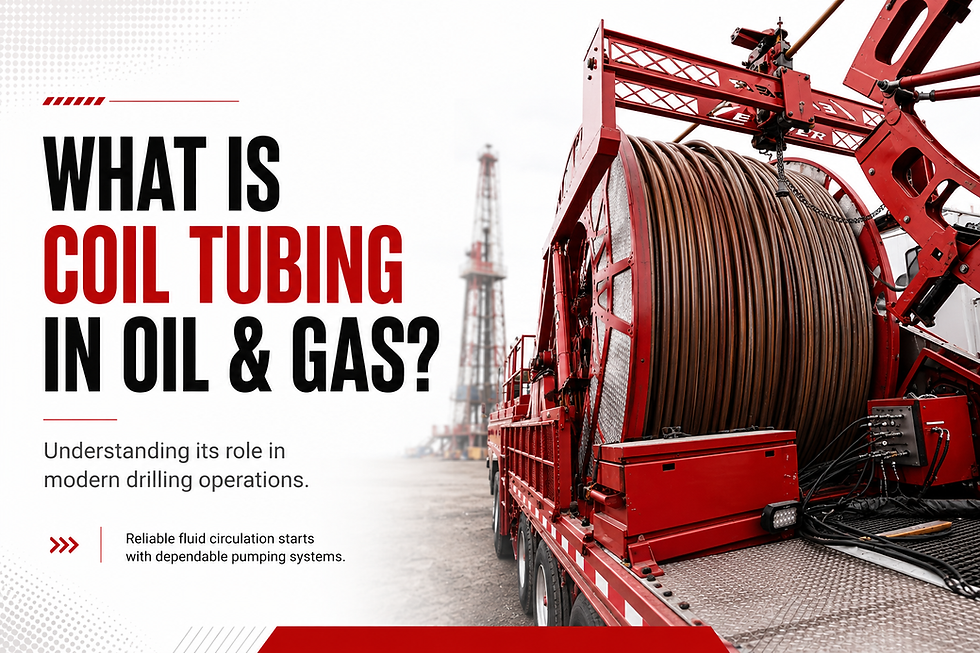
Coil tubing is one of the most versatile technologies used in modern oil and gas operations. Unlike conventional drill pipe, coil tubing consists of a continuous length of steel or composite tubing that is spooled onto a large reel, allowing it to be deployed into a well without making or breaking pipe connections.
Today, coil tubing is widely used for well intervention, cleanouts, stimulation, nitrogen pumping, cementing support, and various maintenance activities. Its ability to perform operations while reducing rig time has made it an important component of efficient well management.
Although coil tubing equipment often receives most of the attention, reliable fluid circulation systems and mud pump performance remain equally important during many drilling and well service applications.
How Does Coil Tubing Work?
A coil tubing unit consists of several integrated systems working together:
A large reel that stores the continuous tubing.
An injector head that pushes and retrieves the tubing.
A control cabin for monitoring operations.
Pressure control equipment that maintains well integrity.
Fluid pumping systems that circulate fluids throughout the operation.
Unlike conventional drilling methods, operators can deploy coil tubing much faster because there is no need to connect individual drill pipe sections.
This reduces operational time while improving efficiency for many well intervention activities.
Common Applications of Coil Tubing in Oil and Gas
Coil tubing is commonly used throughout the life of a well.
Typical applications include:
Well cleanouts
Scale removal
Acid stimulation
Nitrogen lifting
Cementing support
Milling operations
Logging
Fishing operations
Sand cleanout
Well intervention
Each application requires careful planning, pressure management, and reliable equipment capable of operating under demanding field conditions.
Why Fluid Circulation Is Critical
Regardless of the specific operation, fluid circulation plays a significant role in maintaining safe and efficient performance.
Proper circulation helps:
Transport solids from the well.
Maintain pressure control.
Cool and lubricate downhole tools.
Support wellbore stability.
Improve operational efficiency.
Any interruption in fluid delivery can affect productivity and increase operational risks.
This is where dependable mud pump systems become essential.
The Role of Mud Pumps
Mud pumps are responsible for circulating drilling fluids under pressure during drilling and many fluid-handling operations.
Their performance directly influences:
Flow consistency
Pressure stability
Equipment reliability
Operational efficiency
Component life
High-quality mud pump systems help maintain consistent fluid movement while minimizing unnecessary downtime caused by equipment issues.
Whether supporting drilling activities or fluid circulation associated with well service operations, properly maintained mud pumps remain a critical part of the overall system.
Choosing the Right Mud Pump Supplier
Selecting the right mud pump supplier involves more than purchasing equipment.
Experienced suppliers can help customers evaluate:
Pump configuration
Flow requirements
Operating pressure
Fluid characteristics
Replacement parts compatibility
Fluid end selection
Power end components
Engineering support
Repair support
Field service requirements
Working with a knowledgeable supplier helps drilling contractors and operations teams identify solutions that match their specific applications instead of relying solely on equipment specifications.
Why Equipment Reliability Matters
Oilfield operations involve demanding environments where equipment reliability directly affects productivity.
Whether performing drilling activities or supporting well intervention work, reliable mud pumps, quality replacement parts, and technical expertise contribute to smoother operations and reduced maintenance interruptions.
Planning preventive maintenance, monitoring operating conditions, and selecting compatible components all help maximize equipment performance over time.
American Mud Pumps: Supporting Modern Oilfield Operations
American Mud Pumps provides complete mud pump solutions, replacement parts, fluid end components, field service, repair support, and engineering expertise for drilling operations across the oil and gas industry.
By combining quality equipment with technical knowledge, the company helps customers identify mud pump solutions that support demanding operating conditions while maintaining long-term reliability.
Whether your operation requires a complete mud pump, replacement components, or technical assistance, working with an experienced supplier can simplify equipment selection and support operational success.
Coil tubing has transformed the way many well intervention and maintenance activities are performed by providing a faster and more efficient alternative to conventional pipe handling.
However, successful operations depend on more than the tubing itself. Reliable fluid circulation, properly selected mud pump systems, quality replacement parts, and knowledgeable technical support all contribute to safe and efficient performance.
If you're looking for dependable mud pump equipment, replacement parts, or engineering support for your drilling operations, American Mud Pumps offers solutions designed to help keep your operations moving.
Explore more at americanmudpumps.com or contact our team to discuss your application requirements.
Frequently Asked Questions
What is coil tubing in oil and gas?
Coil tubing is a continuous length of steel or composite tubing wound onto a large reel and deployed into a well without making individual pipe connections. It is widely used for well intervention, cleanouts, stimulation, nitrogen pumping, logging, and other maintenance operations that require efficient access to the wellbore.
What is coil tubing used for?
Coil tubing is commonly used for well cleanouts, acid stimulation, nitrogen lifting, fishing operations, scale removal, milling, cementing support, logging, and other well intervention services. Its flexibility allows operators to perform various downhole tasks while minimizing operational downtime.
Is coil tubing used during drilling?
Coil tubing is primarily associated with well intervention rather than conventional drilling. However, specialized applications such as coil tubing drilling (CTD) use continuous tubing for drilling shallow or specific types of wells where operational efficiency and reduced rig time are beneficial.
Why is fluid circulation important during coil tubing operations?
Proper fluid circulation helps transport solids, maintain well control, cool downhole tools, and support overall operational efficiency. Reliable circulation systems also contribute to pressure management and reduce the risk of operational interruptions during well service activities.
What role does a mud pump play in drilling operations?
A mud pump circulates drilling fluid throughout the drilling system, helping maintain wellbore stability, remove cuttings, control pressure, and support drilling efficiency. Consistent mud pump performance is essential for maintaining reliable fluid circulation in demanding oil and gas applications.
How do I choose the right mud pump supplier?
A reliable mud pump supplier should provide more than equipment. Look for technical expertise, application support, replacement parts availability, field service capabilities, engineering guidance, and experience working with different drilling conditions and pump configurations.
What information should I provide when requesting a mud pump quote?
Providing complete technical information helps suppliers recommend the most appropriate solution. Useful information includes the pump manufacturer and model, operating pressure, required flow rate, drilling fluid characteristics, application details, delivery location, and any known part numbers or service history.
Where can I find mud pump parts and technical support in Texas?
Companies that specialize in drilling equipment typically provide mud pump replacement parts, field service, repair support, and engineering assistance for drilling operations. Working with a supplier that understands both the equipment and the application helps ensure compatibility and reliable long-term performance.
Why are replacement mud pump parts important for equipment reliability?
Components such as liners, pistons, valves, seats, and fluid end parts experience normal wear over time. Replacing worn components with compatible replacement parts helps maintain pump performance, reduce unplanned downtime, and support efficient drilling operations.
How can American Mud Pumps support drilling operations?
American Mud Pumps provides complete mud pump systems, replacement parts, fluid end components, engineering expertise, field service, repair support, and technical assistance for drilling operations. The company works with drilling contractors, maintenance teams, and procurement professionals to help identify solutions that meet specific application requirements.
Where can I order mud pump parts in Houston, Texas?
Houston is one of the primary hubs for oil and gas equipment in the United States. When ordering mud pump parts, it is important to work with a supplier that can verify pump models, confirm part compatibility, provide technical guidance, and support field service or repair needs when required. American Mud Pumps supports customers in Houston, across Texas, and throughout the United States with mud pump equipment, replacement parts, and engineering expertise.


Comments